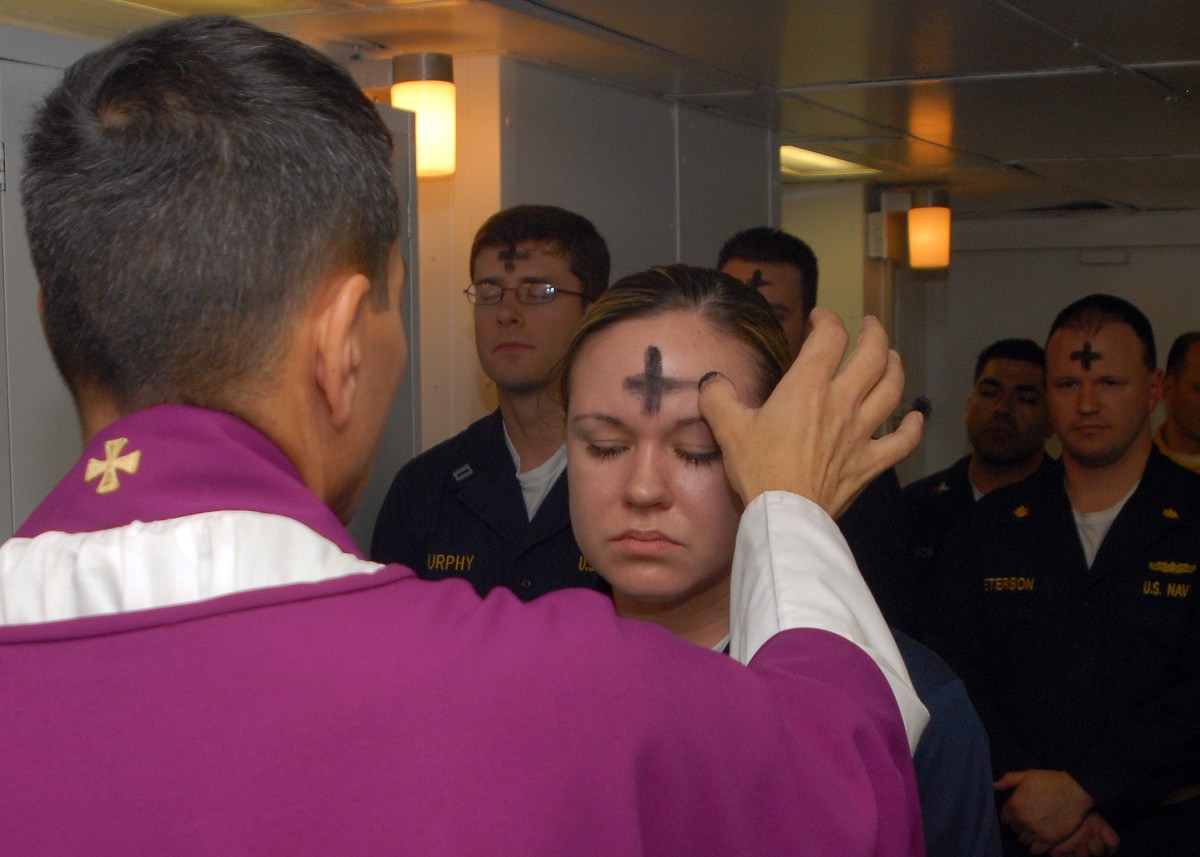
Every year on Ash Wednesday, the Church marks our foreheads with ashes and speaks the words:
“Remember that you are dust, and to dust you shall return.”
— Genesis 3:19
Ash Wednesday opens the season of Lent, a forty-day march into the desert with Christ. The ashes are not a symbol of defeat. They are a sign of reality. We are mortal. We are sinners. We are dependent on God. Ashes mark our beginning and end.
For warriors, especially veterans, this day resonates deeply. We understand discipline. We understand sacrifice. We understand mission. Lent is not a sentimental season. It is a campaign of conversion.
Ash Wednesday confronts us with two truths:
- We will die.
- We are called to live differently before that day comes.
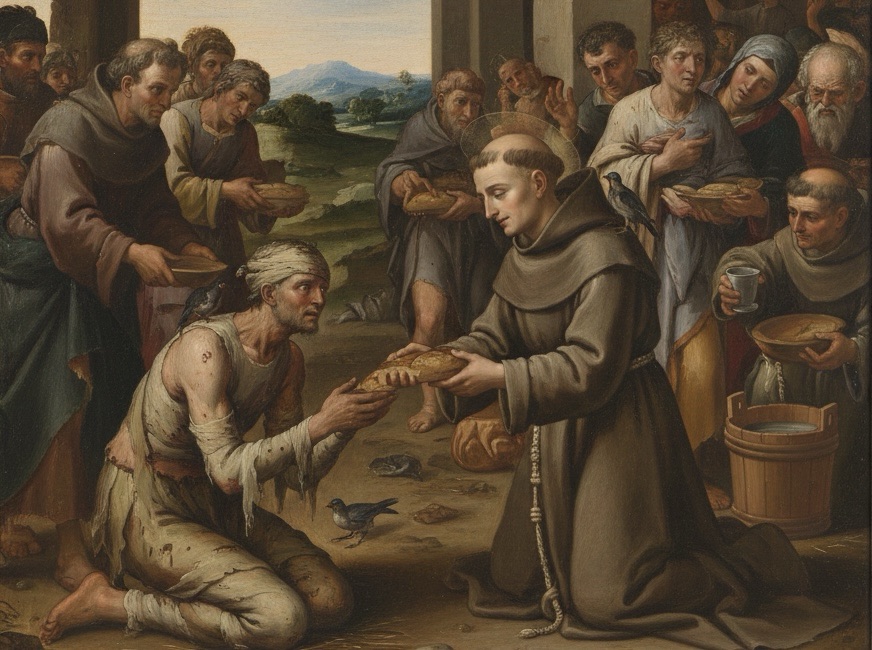
The Community of Warrior Penitents, inspired by St. Francis of Assisi, offers a Rule of Life that can focus and strengthen your Lenten journey. It is not simply about “giving something up.” It is about becoming someone new.
Below is how each element of the Rule can anchor your Lent and forge you into a disciplined disciple.
1. Living the Gospel in the Spirit of St. Francis
Lent is not about self-improvement, rather it is about conversion of our entire lives. St. Francis was a soldier before he was a Saint. He knew ambition, pride, and glory. But Christ met him in weakness and redirected his life.
To live the Gospel this Lent, we need to make choices:
- Choose humility over being right.
- Choose silence over retaliation.
- Choose mercy over judgment.
- Look for Christ in the inconvenient friendship.
Lent becomes powerful when you stop asking, “What am I giving up?” and start asking, “Who is Christ asking me to become?”
2. Prayer and Devotion: Reclaiming the Interior Battlefield
If you do nothing else this Lent, anchor your day in prayer.
The Rule of the Warrior Penitents commits members to:
- Morning and Evening Prayer (Lauds & Vespers)
- Daily Scripture
- The Rosary
- Psalm 51 at night
Lent is about training the interior man with a stronger focus on Christ’s life, death, and resurrection that opens the door to forgiveness for us.
Start simple:
- 10 minutes of Scripture daily.
- Pray Psalm 51 before bed.
- Add one decade of the Rosary. (You can even pray the Rosary while commuting or going about your day).
Discipline in prayer restores order to the soul. A warrior without discipline loses the fight. A Christian without prayer loses clarity.
3. Fraternity and Community: You Are Not Meant to Fight Alone
Isolation is dangerous terrain. Whether it is in combat or in life, you are not meant to face your battles alone. Lent is often treated as a private effort. But conversion thrives in brotherhood and sisterhood.
This season:
- Attend Mass more intentionally.
- Join a small group.
- Call a brother/sister in arms you haven’t spoken to.
- Reconcile an old wound.
- Make an effort to make a connection.
A lone warrior is vulnerable. A disciplined fraternity is resilient.
4. Service and Readiness: Love Must Move
Fasting without charity becomes ego. The Rule emphasizes readiness to serve. Lent sharpens that readiness.
Choose one Corporal or Spiritual Work of Mercy each week:
- Feed someone.
- Visit someone who is lonely.
- Encourage someone who is struggling.
- Forgive someone who does not deserve it.
Love is not theoretical. It is operational. What gifts, talents, and resources do you possess that would be beneficial to those around you? Do you have a degree in Theology? Volunteer to teach Catechism class. Are you a craftsman with a trade? Volunteer to help members of your Church who can’t affort to hire a handyman. Let your love of Christ shine through your servie to others.
5. Works of Mercy: The Combat Zone of Lent
Christ identifies Himself with the hungry, the thirsty, the imprisoned. When you serve them, you meet Him.
Lent shifts your focus outward. Instead of obsessing over your own sacrifices, you enter the suffering of others, with them. You bring strength, support, and a level of acceptance where you see them where they are and come beside them on their journey upward. You become the good Samaritan.
That encounter changes you more than any diet ever will.
6. Simplicity and Technological Discipline: Clear the Noise
Ashes remind us we are dust. Technology tempts us to believe we are gods.
This Lent:
- Reduce social media.
- Limit unnecessary scrolling.
- Simplify your diet.
- Declutter your home.
Simplicity clears mental fog. It creates space for God because it creates time where you can focus solely on God. Rather than scrolling social media, carry your Bible. Read the Catechism. Find a writing of a Saint who lived a life you wish to be more like. Use the time previously spent in self-entertainment as self-growth towards the Lord.
7. Study and Spiritual Growth: Strengthen the Mind
The Rule encourages study of Scripture, the Fathers, and Church teaching.
Lent is an intellectual fast from distraction. It is a redirecting of your heart and mind towards Godly things.
Choose one spiritual book.
Study one Gospel slowly, meditating on each passage in prayer and reflection.
Read the daily readings before Mass, and have a discussion on them with other men/women in your Parish.
Truth strengthens resolve. A trained mind resists temptation.
8. Language, Outreach, and Cultural Awareness: Expand the Mission
Lent is missionary.
If there is a language spoken in your area you do not understand, begin learning basic phrases. If there is a community you avoid, move toward them. Build bridges through the love of Christ. Meet them where they are, learn their language and their culture. St. Paul was able to speak eloquently to the Gentiles because he learned their culture and used it to highlight how they can change their lives through turning to Christ.
The Gospel crosses boundaries. So should we. At the bottom of this post I will list a series of greetings in different languages, you never know which one will be beneficial. A simple “hello” can bring a smile to a tired soul.
9. Stewardship of Creation: Recover Gratitude
Inspired by St. Francis, the Rule calls us to reverence creation. Our actions, prayers, and focus should change to see God’s movement and actions within nature.
This Lent:
- Spend time outside in silence.
- Reduce waste.
- Fast from excess consumption.
- Pick up trash if you see it on the ground.
Creation reminds us of order. And order reminds us of God.
10. Gratitude and Joy: The Mark of True Conversion
Lent is serious, but it is not grim. The ashes are placed on your forehead in the shape of a cross. Even in repentance, there is hope. Gratitude transforms Lent from punishment into preparation.
Give thanks daily:
- For breath.
- For mercy.
- For second chances.
- For Christ.
Find a prayer that connects you with your gratitude and joy for the Lord and memorize it.
Lent Is a Call to Formation
Ash Wednesday does not begin a season of misery. It begins a season of clarity. The Rule of the Warrior Penitents provides structure:
- Prayer.
- Discipline.
- Brotherhood.
- Service.
- Study.
- Simplicity.
- Mission.
Veterans know that without structure, drift happens. Lent is not about drift. It is about deliberate transformation.
This year, do not wander through Lent. Be purposeful and live with intent on centering yourself on the Lord.
Live it with a Rule.
Live it with intention.
Live it like a warrior who knows the mission is holiness.
And when Easter comes, may you rise not just having given something up, but having become someone new.
In Christ and Prayer,
WP
Common Greetings (Phonetic for English Speakers)
Spanish
- Hello — Hola (OH-lah)
- How are you? — ¿Cómo estás? (KOH-moh es-TAHS)
- Thank you — Gracias (GRAH-see-ahs)
- You’re welcome — De nada (deh NAH-dah)
- Have a nice day — Que tengas un buen día (keh TEN-gahs oon bwen DEE-ah)
French
- Hello — Bonjour (bohn-ZHOOR)
- How are you? — Comment ça va? (koh-mahn sah VAH)
- Thank you — Merci (mehr-SEE)
- You’re welcome — De rien (duh ree-EN)
- Have a nice day — Bonne journée (bun zhoor-NAY)
Arabic (Modern Standard)
- Hello — As-salāmu ʿalaykum (ah-sah-LAH-moo ah-LAY-koom)
- How are you? — Kayfa ḥālak? (KAY-fah HAH-lak)
- Thank you — Shukran (SHOOK-rahn)
- You’re welcome — ʿAfwan (AF-wahn)
- Have a nice day — Yawm saʿīd (YOWM sah-EED)
Mandarin Chinese (Pinyin)
- Hello — Nǐ hǎo (nee HOW)
- How are you? — Nǐ hǎo ma? (nee HOW mah?)
- Thank you — Xièxiè (shyeh-shyeh)
- You’re welcome — Bù kèqì (boo kuh-CHEE)
- Have a nice day — Zhù nǐ yǒu měi hǎo de yītiān (joo nee yo MAY how duh ee-tyen)
Cantonese (Jyutping-style phonetic)
- Hello — Néih hóu (NAY ho)
- How are you? — Néih hóu ma? (NAY ho mah?)
- Thank you — M̀h gōi (mm GOY)
- You’re welcome — M̀h sái haak hei (mm SIGH hahk HAY)
- Have a nice day — Juk néih yáuh go hóu yat (jook NAY yow go ho yuht)
Korean
- Hello — Annyeong haseyo (ahn-nyoung hah-say-yo)
- How are you? — Jal jinaeseyo? (jal jih-NAY-seh-yo?)
- Thank you — Gamsahamnida (gam-sah-ham-nee-da)
- You’re welcome — Cheonmaneyo (chun-mahn-eh-yo)
- Have a nice day — Joeun haru doeseyo (JOH-oon hah-roo dweh-seh-yo)
Japanese
- Hello — Konnichiwa (kohn-nee-chee-wah)
- How are you? — Ogenki desu ka? (oh-GEN-kee dess kah?)
- Thank you — Arigatō (ah-ree-GAH-toh)
- You’re welcome — Dōitashimashite (doh-ee-tah-shee-MAH-shee-teh)
- Have a nice day — Yoi ichinichi o (yoh-ee ee-chee-nee-chee oh)
German
- Hello — Hallo (HAH-loh)
- How are you? — Wie geht’s? (vee GATES?)
- Thank you — Danke (DAHN-kuh)
- You’re welcome — Bitte (BIT-uh)
- Have a nice day — Schönen Tag noch (SHER-nen tahk nokh)
Portuguese (Brazilian pronunciation)
- Hello — Olá (oh-LAH)
- How are you? — Como você está? (KOH-moh voh-SEH es-TAH?)
- Thank you — Obrigado (oh-bree-GAH-do)
- You’re welcome — De nada (jee NAH-dah)
- Have a nice day — Tenha um bom dia (TEN-yah oong bong JEE-ah)





 The Community of Warrior Penitents